Explore Our Full Pasta Menu

Indulge in our variety of pasta dishes, made with fresh ingredients and crafted with passion.

Gourmet Pasta
Vegetarian
Succulent Steak
Chef's Special
Seafood Extravaganza
Seafood

Menu

A delightful selection of pasta dishes to satisfy your cravings.

Pasta from Roma

1. Alla Carbonara

Alla Carbonara

Crispy Guanciale, Egg,, Garlic,Black Pepper, Pecorino Romano cheese

About
The name carbonara first appeared in print in 1950, when the Italian newspaper La Stampa escribed it as a Roman dish sought
after by American officers, after the liberation of Rome by the Allies in 1944. Allergies (1,3,5,7,12)

2. Alla Cacio e Pepe

Alla Cacio e Pepe

Anchovies, Caper’s, Black olives, Diced Tomatoes, Oregano, Chilli Peppers, Black Pepper, Fresh Parsley.

About.
In a 2005 article from Il Golfo—a daily newspaper serving the Italian islands of Ischia and Procida —Annarita Cuomo asserted that sugo alla puttanesca was invented in the 1950s by Sandro Petti, co-owner of ‘O Rangio Fellone, a famous Ischian restaurant and nightspot. Allergies (1,3,5,7,12)

3. All' Arrabiata

All' Arrabiata

Arrabiata( Spicy sauce ) with Garlic, Black pepper, chili peppers. Olive oil, fresh Basil

About
The Birth of Arrabiata (Angry) was in 1950s to 1960s at the time when spicy food was in Vogue in Roman Cuisine. The dish was celebrated several times in Italian Movies. Allergies (1,3,5,7,12)

4. Alla Gricia

Alla Gricia

Crispy Guanciale, Pecorino Romano cheese, Black Pepper.

About.
Gricia is a staple dish in Roman culinary tradition. It’s a simple yet hearty meal, ideal for shepherds working far from home, and uses easily preserved ingredients such as guanciale and pecorino cheese from their sheep. It’s also known as the “white” version of Amatriciana, as it’s believed to predate the tomato-based recipe. Allergies (1,3,5,7,12)

5. Alla Puttanesca

Alla Puttanesca

Anchovies, Caper’s, Black olives, Diced Tomatoes, Oregano, Chili Peppers, Black Pepper, Fresh Parsley.

About.
In a 2005 article from Il Golfo—a daily newspaper serving the Italian islands of Ischia and Procida —Annarita Cuomo asserted that sugo alla puttanesca was invented in the 1950s by Sandro Petti, co-owner of ‘O Rangio Fellone, a famous Ischian restaurant and nightspot. Allergies (1,3,5,7,12)

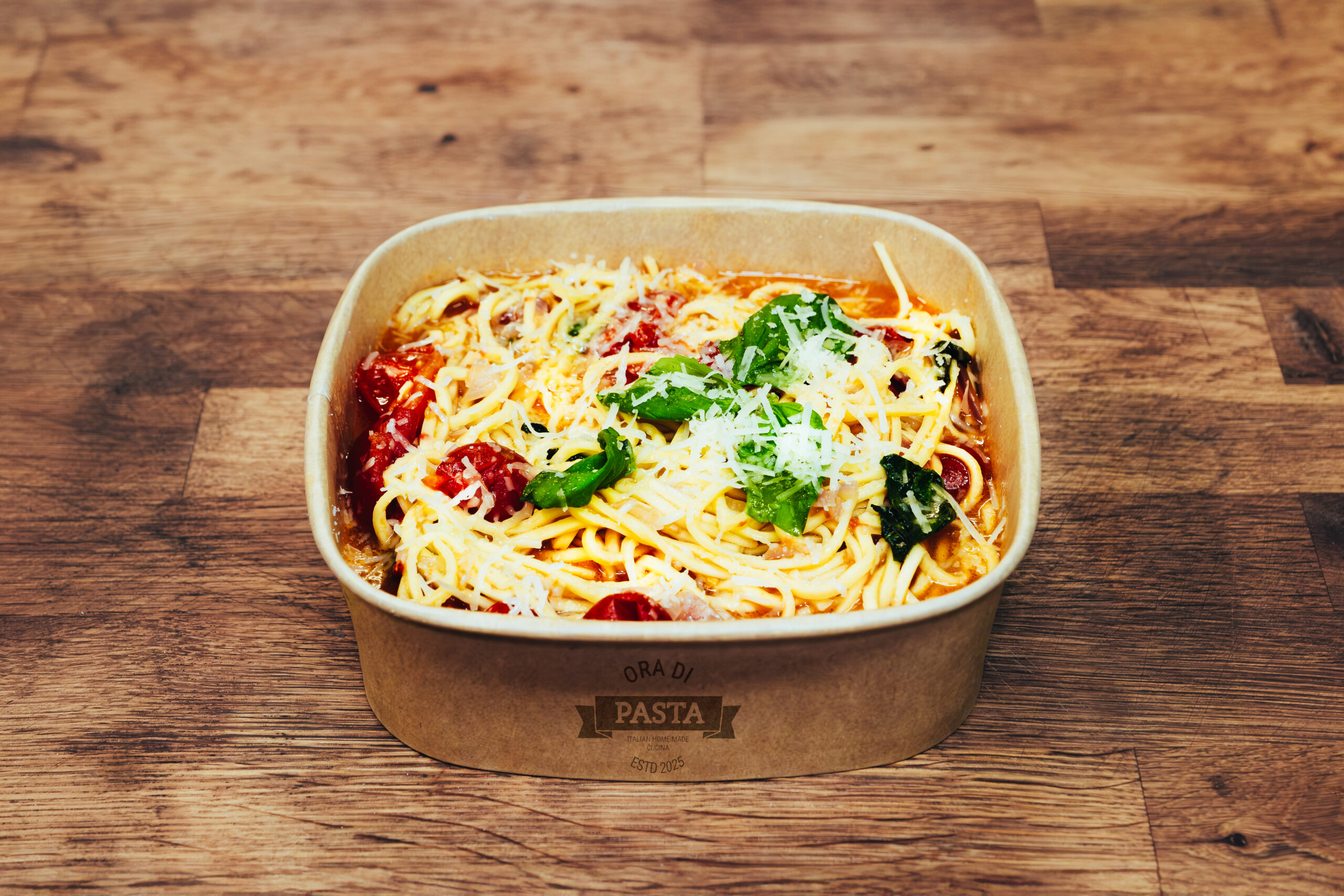
6. Cherry Tomatoes & Basil

Cherry Tomatoes & Basil


Fresh tomatoes, Onion,Olive oil, Fresh Basil , Grated Parmesan cheese, The Birth of Tomato Pasta & Fresh Basil.

About
The True Pasta with Tomato Sauce, developed in Naples in the first half of the nineteenth century. The first Specific Recipe for Spaghetti with tomato sauce appears in Ippolito Cavalcanti’s CookBook Cucina Teoretica- Pratica in 1837. Allergies (1,3,5,7,12)

7. Aglio e Oglio

Aglio e Oglio

Olive oil, Garlic.

About

Aglio e olio originated in Naples, Italy, where it was created as a classic example of cucina povera, or “poor cooking”. It is a simple, inexpensive dish made from pantry staples: garlic (aglio), olive oil (olio), and pasta. Allergies (1,3,5)

8. Alla Gricia

Alla Gricia

Crispy Guanciale, Pecorino Romano cheese, Black Pepper.

About.
Gricia is a staple dish in Roman culinary tradition. It’s a simple yet hearty meal, ideal for shepherds working far from home, and uses easily preserved ingredients such as guanciale and pecorino cheese from their sheep. It’s also known as the “white” version of Amatriciana, as it’s believed to predate the tomato-based recipe. Allergies (1,3,5,7,12)

9. Alla Marinara Sauces

Alla Marinara Sauces

San Marzano tomato sauce, Fresh Basil, Fresh Garlic, Oregano, Olive oil.

About
Pasta alla marinara’s origins are rooted in 16th-century Sicily, Italy, after the introduction of tomatoes to Europe. The sauce was named “marinara” (“sailor-style”) because it was a versatile meal for sailors and fishermen, designed to last on long sea voyages without spoilage due to the tomatoes’ acidity and simple ingredients like garlic and herbs. The first printed recipe for a tomato sauce appears in a 1692 Italian cookbook, though this was more of a salsa than the sauce known today.
Allergies (1,3,5,8,9)

10. Alla Norma

Alla Norma

Cubed Marinated Eggplant, Marinara Sauce, Fresh Basil, Parmesan cheese, Olive oil, Onion, Black Pepper.

About
It was named in honour of a native of Catania, Vincenzo Bellini, the composer of the opera Norma. [3][1] It is said that the Italian writer Nino Martoglio exclaimed “This is a real ‘Norma’!”, meaning a masterpiece, when he tasted the dish,[5][6] although the name is not attested until decades after his death. Allergies (1,3,5,7,12)

11. Porcini Mushroom & Garlic

Porcini Mushroom & Garlic

Fresh Garlic, Porcini Mushroom, Parsley, Black Pepper, Olive oil, Grated Parmesan cheese.

About
The origins are linked to Tuscany and Emilia-Romagna, areas that offer abundant porcini mushrooms in autumn. Fresh pasta (tagliatelle or pappardelle) and porcini mushrooms are key ingredients, symbols of the local cuisine. Before the arrival of the tomato, dishes like this were common, prepared with local, seasonal ingredients. Allergies (1,3,5,7)

12. Alla Boscaiola

Alla Boscaiola

Cubed Marinated Eggplant, Marinara Sauce, Fresh Basil, Parmesan cheese, Olive oil, Onion, Black Pepper.

About
It was named in honour of a native of Catania, Vincenzo Bellini, the composer of the opera Norma. [3][1] It is said that the Italian writer Nino Martoglio exclaimed “This is a real ‘Norma’!”, meaning a masterpiece, when he tasted the dish,[5][6] although the name is not attested until decades after his death. Allergies (1,3,5,7,12)

13. Black Truffle

Black Truffle

Fresh Garlic, Italian Black Truffle, Black Pepper, Olive oil, Grated Parmesan cheese.

About
Tagliatelle al tartufo (tagliatelle with truffle) does not have a single origin but emerged from the regions of Italy where truffles are abundant, particularly Tuscany, Umbria, Le Marche, and Piedmont. The dish combines tagliatelle pasta, which itself originated in the Emilia-Romagna region, with fresh truffles, a culinary luxury found in these central and northern
Italian regions. Allergies (1,3,5,7)

14. All 'Amatriciana

All 'Amatriciana

Fresh Garlic, Italian Black Truffle, Black Pepper, Olive oil, Grated Parmesan cheese.

About
Tagliatelle al tartufo (tagliatelle with truffle) does not have a single origin but emerged from the regions of Italy where truffles are abundant, particularly Tuscany, Umbria, Le Marche, and Piedmont. The dish combines tagliatelle pasta, which itself originated in the Emilia-Romagna region, with fresh truffles, a culinary luxury found in these central and northern
Italian regions. Allergies (1,3,5,7)

15. Maccheroncini All' Abruzzese

Maccheroncini All' Abruzzese


About
Homemade Fresh Maccheroncini, Crispy Pancetta, Black Pepper, Onion, Fresh Basil, Parsley, Pecorino Romano cheese, Grated Parmesan cheese. Allergies (1,3,5,7,12)

16. All' Arrabiata

All' Arrabiata

Arrabiata( Spicy sauce ) with Garlic, Black pepper, chilli peppers. Olive oil, fresh Basil.

About
The Birth of Arrabiata (Angry) was in 1950s to 1960s at the time when spicy food was in Vogue in Roman Cuisine. The dish was celebrated several times in Italian Movies. Allergies (1,3,5,7,12)

17. Bigoli in Salsa

Bigoli in Salsa

Red Onion, Anchovies, Fresh Parsley, Extra Virgin Olive Oil.

About
Bigoli Salsa is a Venetian pasta dish with whole wheat Bigoli, Anchovies, Extra Virgin Olive oil, and onion. While today Anchovies are usually used, in the past, it was often prepared with sardines. It is considered one of the signature dishes of Venice.
Allergies (1,3,4,5,7,12)

18. Ligurian city of Genoa All' Pesto Genovese

Bigoli in Salsa

Fresh basil, garlic, pine nuts, Parmigiano Reggiano, Pecorino Sardo cheese, salt, and extra virgin olive oil.

About.
The first example was, in Roman times, the moretum, described. The first recipe for Genovese pesto dates back to the nineteenth century , even if it certainly owes its origins to older crushed sauces such as the agliata (Ligurian version of
the classic agliata), based on garlic and walnuts, widespread in Liguria during the Genovese maritime republic and the French pistou. In most of the Genoa and La Spezia areas, leftover cheese rinds were used because they were less expensive, and potatoes were also added because they were cheaper. Allergies (1,3,5,7,12)

Full Pasta Menu